
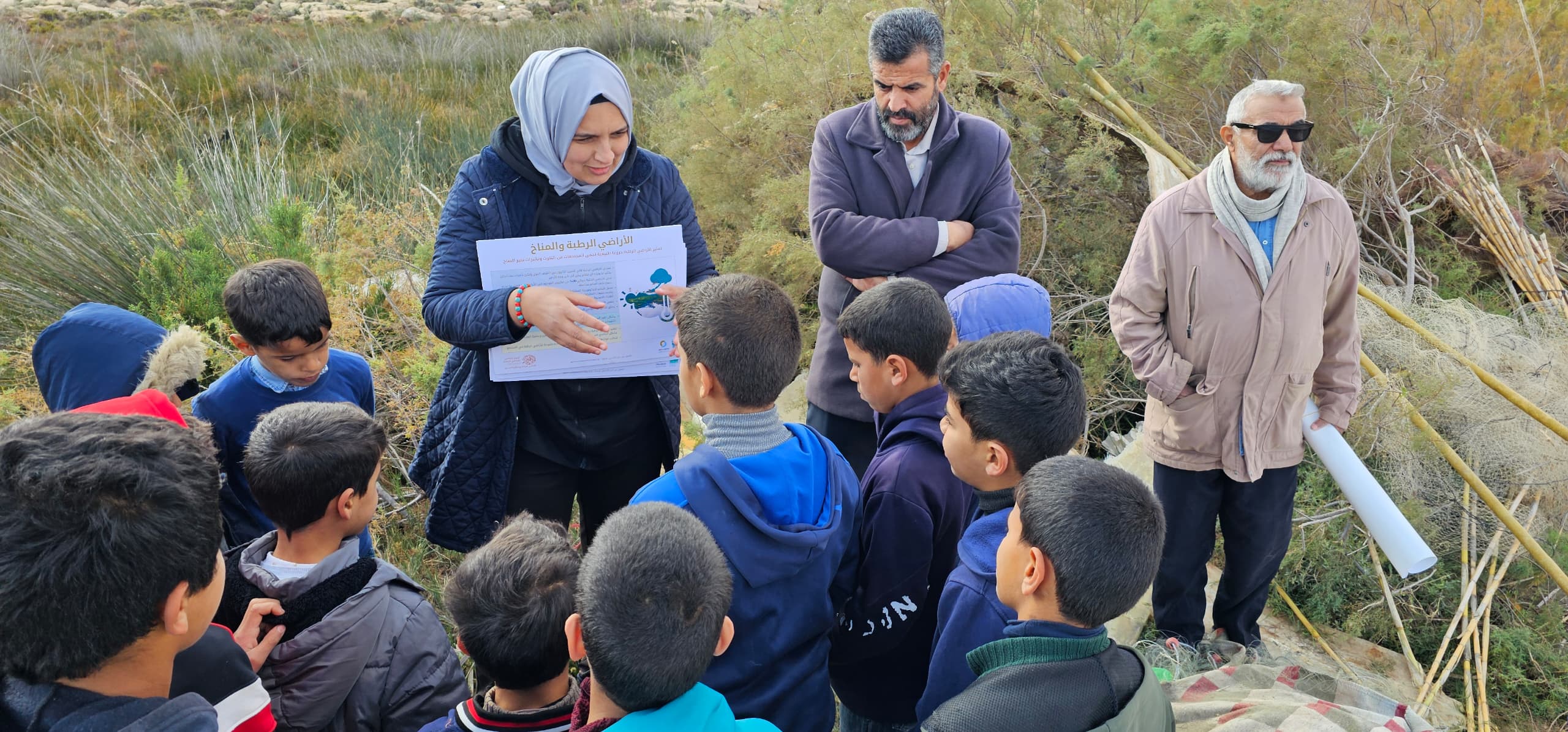
Along Libya’s Mediterranean coastline, marine ecosystems support fisheries, food security and local livelihoods. Yet strengthening Marine Protected Areas (MPAs) requires more than ecological data — it demands inclusive governance, community trust, and gender-responsive approaches.
Through the GEF-financed Mediterranean Sea Programme (MedProgramme), Libya is working to expand and strengthen its national Marine Protected Area network under the Management Support and Expansion of Marine Protected Areas Project. A central principle guides this effort: marine and coastal protection cannot be gender neutral. When women and men participate equally in conservation planning, monitoring and decision-making, outcomes are stronger and more sustainable.
As a valued partner in this work, the Marine Biology Society of Libya, led by Executive Director Sara Almabruk, plays a critical role in connecting science, communities and gender inclusion.
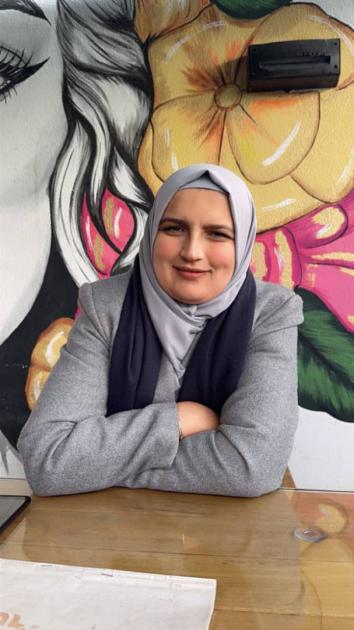
Can you share your journey leading up to your current position?
“I never planned for it, but looking back on my journey, I feel deeply grateful. Eleven years ago, it all started as a simple blog I created during my master’s studies. The goal was to offer reliable resources for those interested in marine biology. I never imagined it would become such a pivotal step in my professional life.”
The blog would later evolve into a Facebook page, and by the end of 2019, many people would encourage me to establish the society and take on the role of Executive Director.
“At the beginning, our focus was on citizen science, which helped build strong connections with fishers and marine enthusiasts.”
Through these early engagements, she found herself addressing critical questions that lie at the heart of MPA governance: Why should we stop or regulate the catch of a certain species? Why is it endangered? Why is it important to share knowledge with one another? These questions became the foundation of the society’s outreach as the goal was not simply to inform, but to engage, to listen, and to build trust.
“Over time, our work expanded to include regional partnerships, multilingual campaigns, and technical documentation. What started as a quiet initiative became a platform for collaboration, advocacy, and empowerment especially for women and youth in the marine sector. Today, I serve as Executive Director of the Society, and I carry with me the lessons of every step: the fear of starting, the joy of connecting, and the responsibility of leading with purpose.”
As chairperson of the Marine Biology Society (MBS) of Libya, what is your primary focus?
“The most important part of MBS work is ensuring that everyone from fishers to marine enthusiasts has access to reliable information,” Sara explains. “We present knowledge in a simple, approachable language, so that everyone can understand environmental issues broadly and adopt practical steps that align with Libya’s current realities.”
This approach closely mirrors the MedProgramme’s efforts to promote participatory MPA governance, where informed communities contribute meaningfully to conservation planning and monitoring.
“We also aim to provide researchers, especially women, with opportunities to grow and strengthen their capacities,” she adds. “Our hope is that the next generation of scientists will be better equipped to face the challenges within their field and contribute meaningfully to marine conservation.”
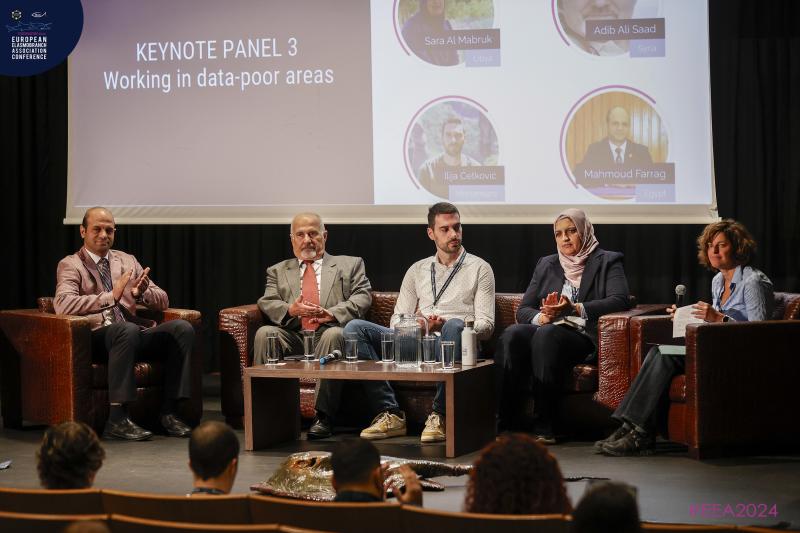
What is the status of women in the marine sector in Libya?
“Women in Libya’s marine sector remain underrepresented in technical, policy, and field-based roles, yet their contributions are steadily growing,” she says.
Many are active in education, awareness campaigns, and community engagement. Limited access to training or fieldwork often restricts their full participation.
Despite these challenges, women are present in eco-tourism, artisanal industries, and citizen science. “Libya’s ongoing recovery offers a chance to reshape roles in marine governance. With targeted support, women can lead research, conservation, and policy development. Empowering women strengthens both environmental resilience and community well-being.”
Under the MedProgramme, integrating women’s perspectives into monitoring systems and consultation processes is becoming an increasingly important dimension of MPA strengthening in Libya — reinforcing exactly the shift Sara describes.
What activities are needed to empower women in the marine sector?
“Empowering women requires education, access, and leadership,” she says. “Activities should include technical training in marine science, conservation, and fisheries management, alongside mentorship programmes connecting experienced professionals with emerging female leaders.”
Safe access to fieldwork is essential, as is support such as transportation and childcare.
“Visibility also matters,” Sara adds. “Women’s contributions should be recognized through media, awards, and inclusion in dialogues. “Supporting women-led initiatives in eco-tourism and sustainable livelihoods can strengthen economic resilience and environmental stewardship. Equity and inclusion must be embedded in governance frameworks to create lasting change.”
These elements including capacity-building, visibility, and institutional inclusion are increasingly being reflected in the MedProgramme’s gender-sensitive monitoring approaches within Libyan MPAs.
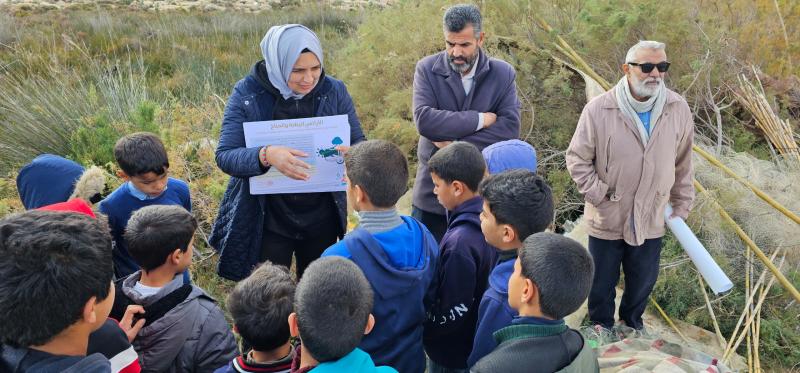
What challenges and opportunities shaped your journey as a leader?
“In the beginning, I was genuinely hesitant about fieldwork,” she admits. “That fear led me to rely heavily on citizen science as a safer way to engage with marine issues.”
Her first field visit changed that perception.
“I was met with warmth and generosity from fishing communities, who shared their knowledge with sincerity and pride.” Their openness revealed the power of direct engagement, an essential ingredient in effective MPA management.
Navigating the academic landscape in Libya was another challenge.
“Many researchers representing a rigid structure that was hard to access, especially for someone introducing new approaches. But I also encountered researchers who were genuinely supportive. “Their encouragement reminded her that even within rigid systems, there are individuals willing to open doors.”
The absence of a female mentor further shaped her path. “ I decided to become the mentor I once searched for.” Support from fellow researchers in Tunisia strengthened her confidence and reinforced the value of Mediterranean Cooperation- a principle central to the MedProgramme’s regional framework.
Through leaders like Sara and partnerships between civil society and national authorities, gender-responsive marine protection is gaining ground in Libya. As the MedProgramme advances the expansion and effective management of Marine Protected Areas — including identifying 26 potential conservation sites and promoting inclusive monitoring approaches — voices like hers ensure that conservation is not only ecologically sound, but socially equitable.
In Libya’s coastal future, science, community trust and women’s leadership are not separate priorities. They are inseparable.
About the MedProgramme
The Mediterranean Sea Programme (MedProgramme) is a Global Environment Facility (GEF) funded, multi-focal area initiative implemented by UN Environment Programme’s Mediterranean Action Plan (MAP). It is the first GEF programme of its kind in the Mediterranean, designed to reduce major transboundary environmental stresses in coastal areas while strengthening climate resilience, water security and the health and livelihoods of coastal populations. The Programme operates across nine beneficiary countries—Albania, Algeria, Bosnia and Herzegovina, Egypt, Lebanon, Libya, Montenegro, Morocco and Tunisia—in cooperation with a wide spectrum of partners from government institutions, regional activity centres, civil society, academia, industry, banking and the private sector.
In Libya, under Child Project 3.1, implemented by UNEP/MAP with SPA/RAC, IUCN-Med, WWF North Africa and the Ministry of Environment, the MedProgramme is strengthening the national system of Marine Protected Areas. Recent achievements include the identification of 26 potential conservation sites to guide Libya’s future MPA network, national consultations on a draft Protected Areas Law, and capacity-building activities in the Ain El Ghezala, Gara Island and Farwa Lagoon MPAs. A national workshop in Farwa Lagoon in 2025 also advanced a more inclusive and gender-sensitive monitoring approach, incorporating women’s perspectives and community knowledge into MPA management.